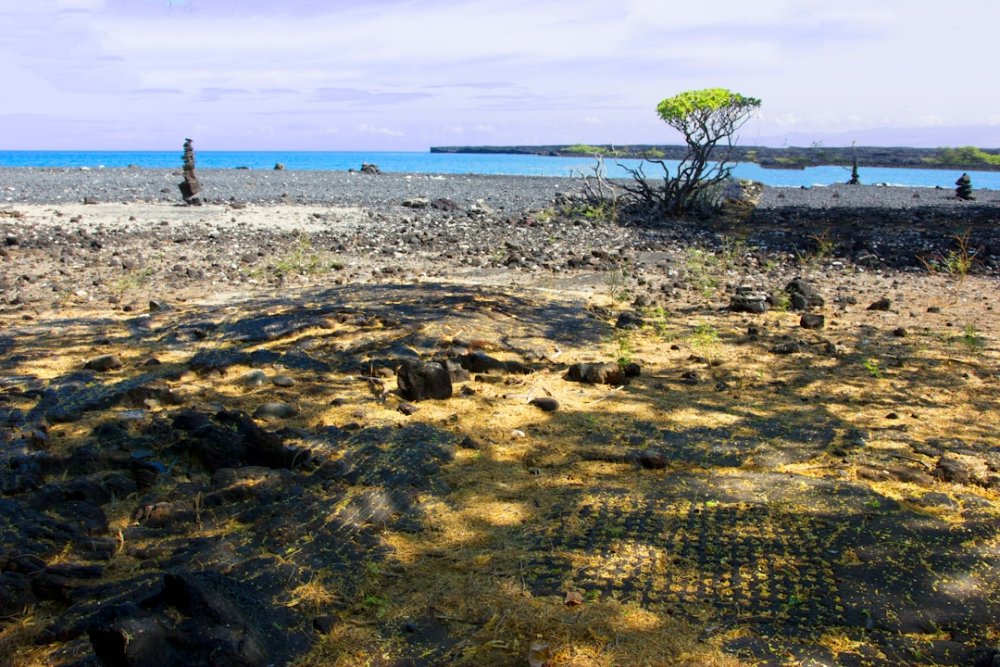
Coral sand has poor porosity, high pH, lack of organic matter, poor adhesion, poor nutrition, poor water retention capacity, so it is not suitable for growing agricultural crops for humans and livestock and does not bring economic efficiency to local people.
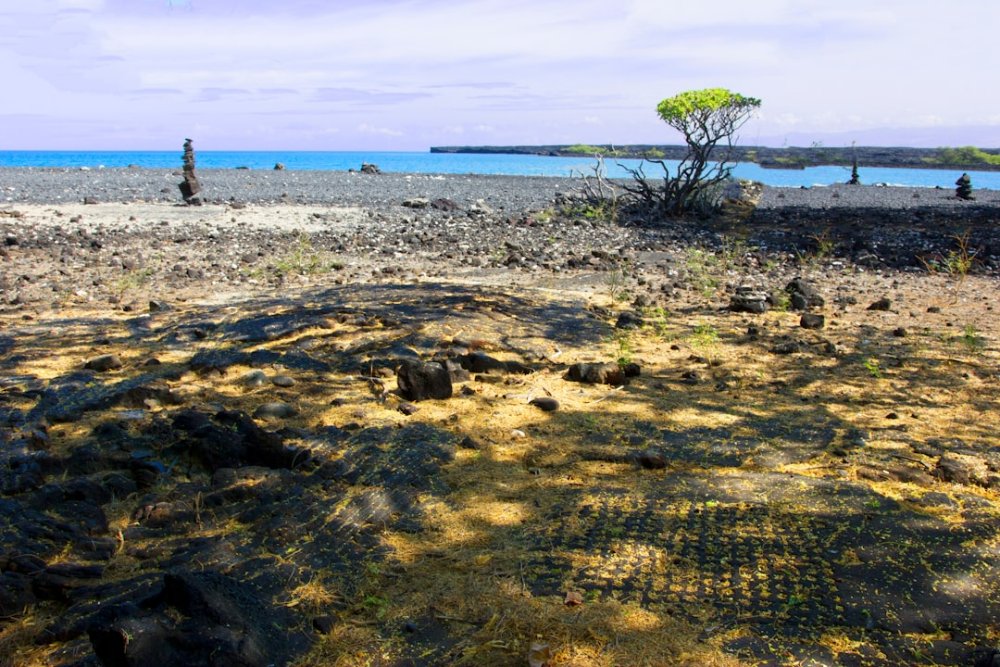
After a period of research, TUMIKI Institute of Technology has successfully developed a technological solution to quickly cover coral reefs with green land.
The key to the success of coral reef greening technology is to retain water to provide moisture, limit water loss, and create an on-site source of nutrients for native plants that thrive in harsh conditions. There are two main technological solutions for coral reef sand reclamation: the technological solution that includes creating squares covered by low fences and the technological solution that does not include creating squares covered by fences. With technological solutions that do not include creating squares with fences, use the following solutions: sandblasting to create small banks along contour lines; dividing small cells with biodegradable plastic fences or local materials; improving the surface soil to plant sea purslane; improving the soil in the holes planned to plant native trees as fences and collect rainwater. Each solution has different technical characteristics and costs. Based on the geographical characteristics and resources of each region, apply appropriate technological solutions.
The use of these technological solutions helps shorten the time and increase the efficiency of converting coral sand into sea sand, helping to improve the livelihoods of local people.